About this series
The 9600 Series is our flagship color-change wrap film for cars and motorcycles: a flexible, premium polymeric PVC engineered for full and partial wraps, supplied on the industry-standard 1.52 m (60 in) × 18 m roll.
The construction is four layers: an extra protective film on selected variants, the polymeric color film, a pressure-sensitive repositionable adhesive with bubble-free air-release channels, and a transparent PET release liner carrying the MAXDECAL 9600 markings. The film stays repositionable while the panel is being fitted, and trapped air is worked out through the channels instead of staying as bubbles.
The selection is the widest in our wrap range: 14 finish families running from Wet Gloss, Super Matt and Super Matt Chrome through Ultra and Supreme Metallic, Super Chrome, Super Glossy Candy, Macaron, Satin Metallic and Satin Matt, the Chromaluxtion color-flip family and the 54-shade Delution gradient palette, up to Super Glossy Carbon. The printable films and their overlaminates — 11 SKUs on 1.55 m × 22.86 m rolls — are listed here as well and have a page of their own: the 9600 Printable Series.
Key features
- 14 finish families and 132 colour SKUs in one wrap line: gloss, matt, chrome, metallic, candy, macaron, satin, color-flip, gradient and carbon looks that would normally be spread across several separate ranges.
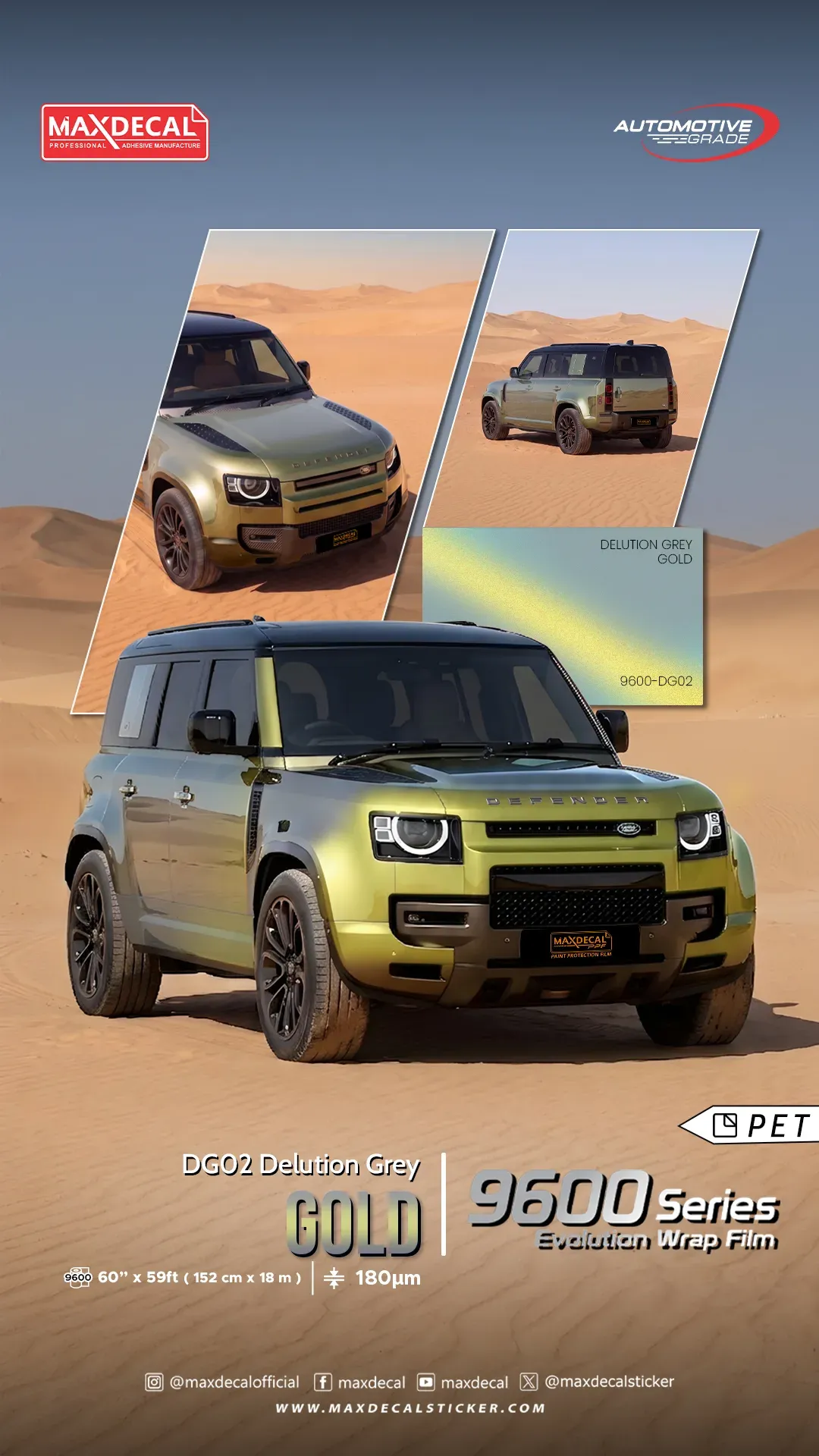
- The Delution gradient family alone covers 54 SKUs — color-shifting two-tone finishes that read differently as the viewing angle changes, grouped by color theme so a full palette is easy to present.
- Repositionable during fitting: the clear permanent adhesive lets installers lift and re-lay the film while positioning, then locks down for service.
- Transparent PET release liner across the range, with bubble-free air-release channels and MAXDECAL markings — tear-resistant, stable under tension and clean to release, which is what makes large-panel and one-person installs realistic.
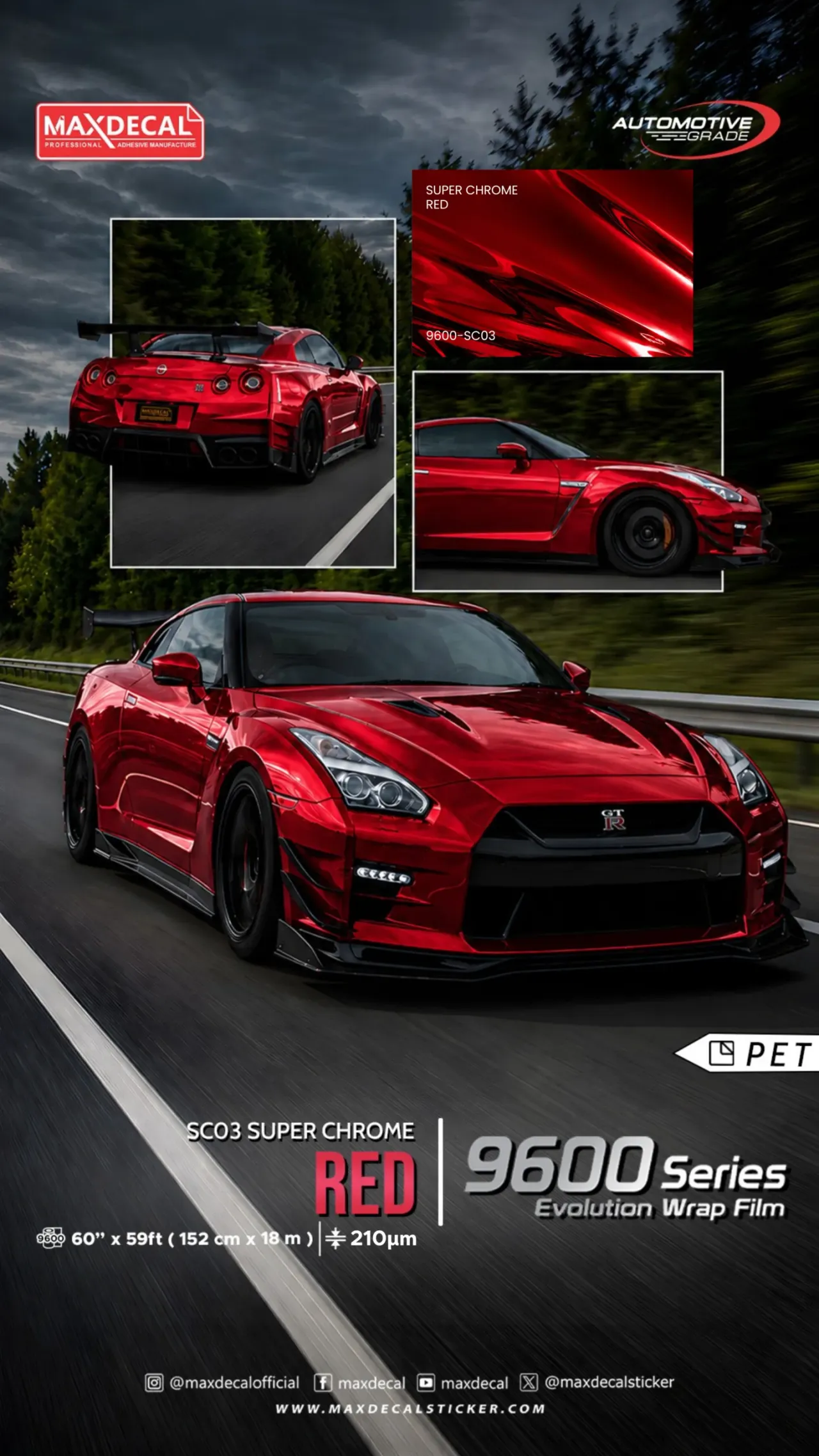
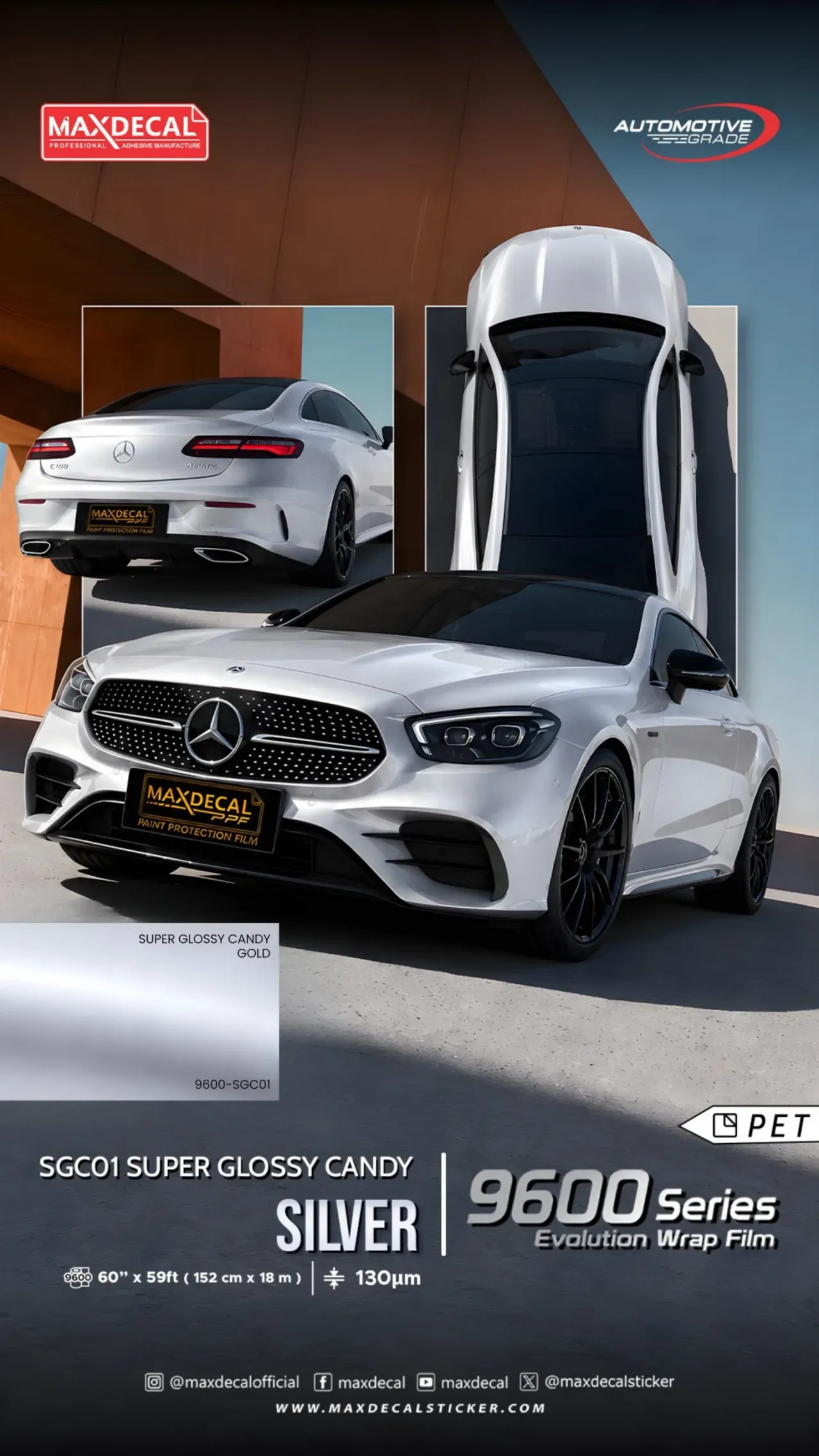
- Thickness tuned per family rather than one compromise gauge — from 130 µm Super Glossy Candy and 150 µm Super Matt up to 160 µm Wet Gloss, 200 µm Super Glossy Carbon and 210 µm Super Chrome.
- Published service life across the series: 3 years outdoor on vertical panels (2 years horizontal) and 5 years indoor vertical (3 years horizontal), per the official 9600 datasheets.
- A clean-removal wrap film: polymeric construction positioned as the sensible step up from standard calendered media — the line we recommend for truck and container wraps, removable with heat without damaging the original paint.
Applications
Full vehicle color change
Complete car wraps in gloss, matt, satin, chrome, metallic, candy, gradient and carbon finishes.
Motorcycle and scooter wraps
Flexible polymeric film handles tanks, fairings and curved panels.
Partial wraps and accents
Roof, hood, mirrors, bumpers, trim, spoilers and interior panels.
Commercial and fleet wraps
Vans, trucks and container bodies where clean removal at end of service matters.
Gallery
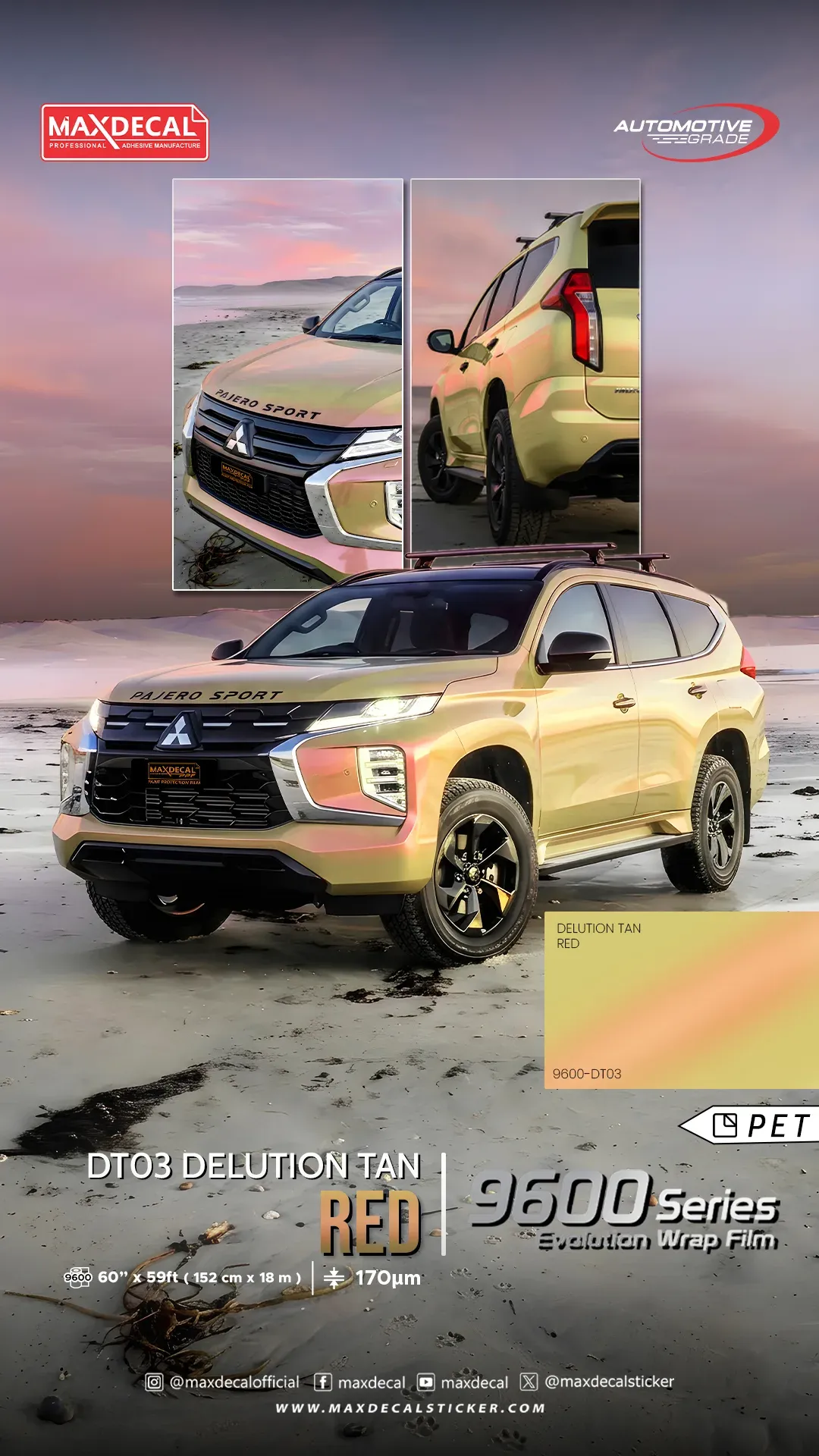
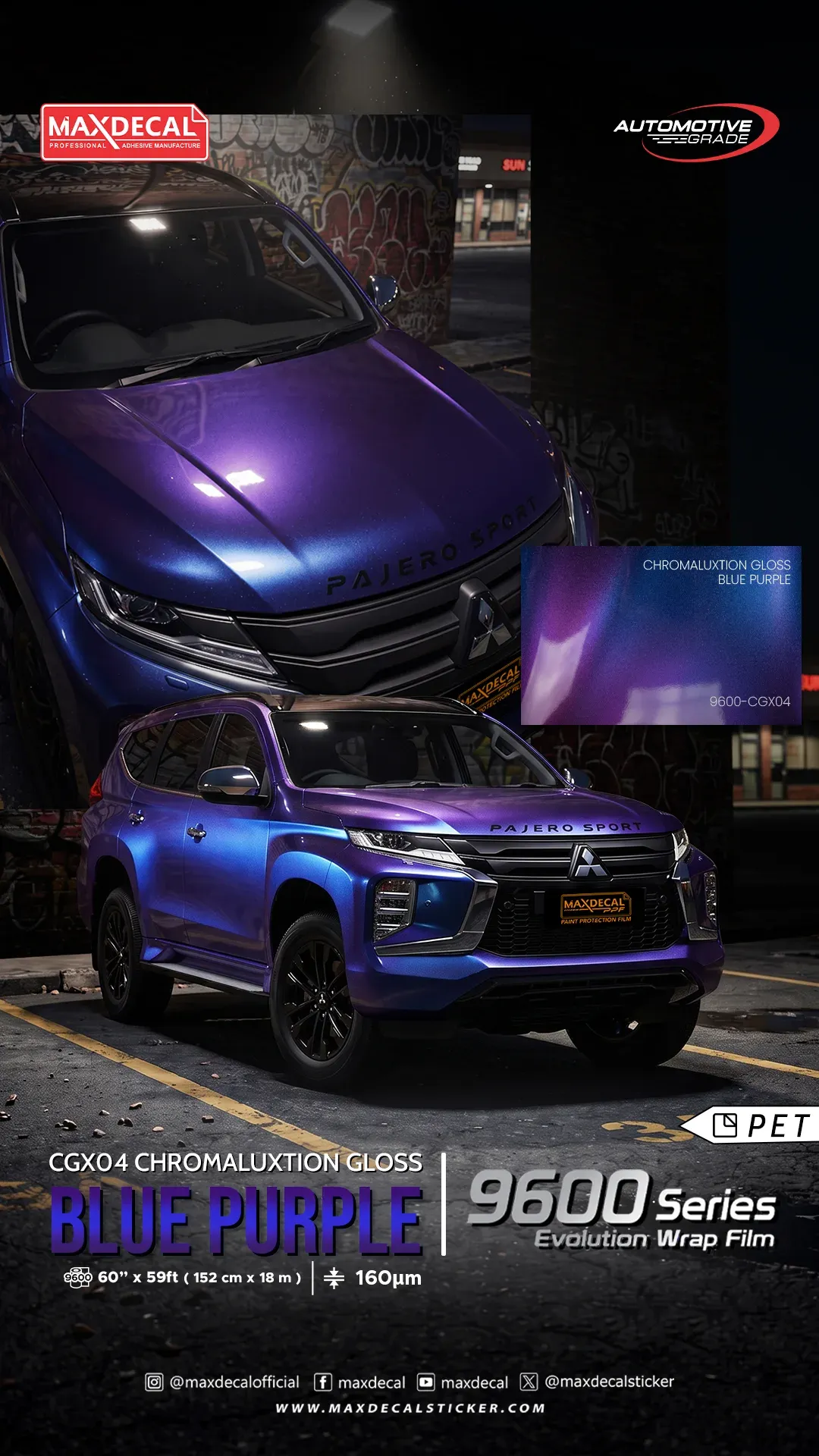
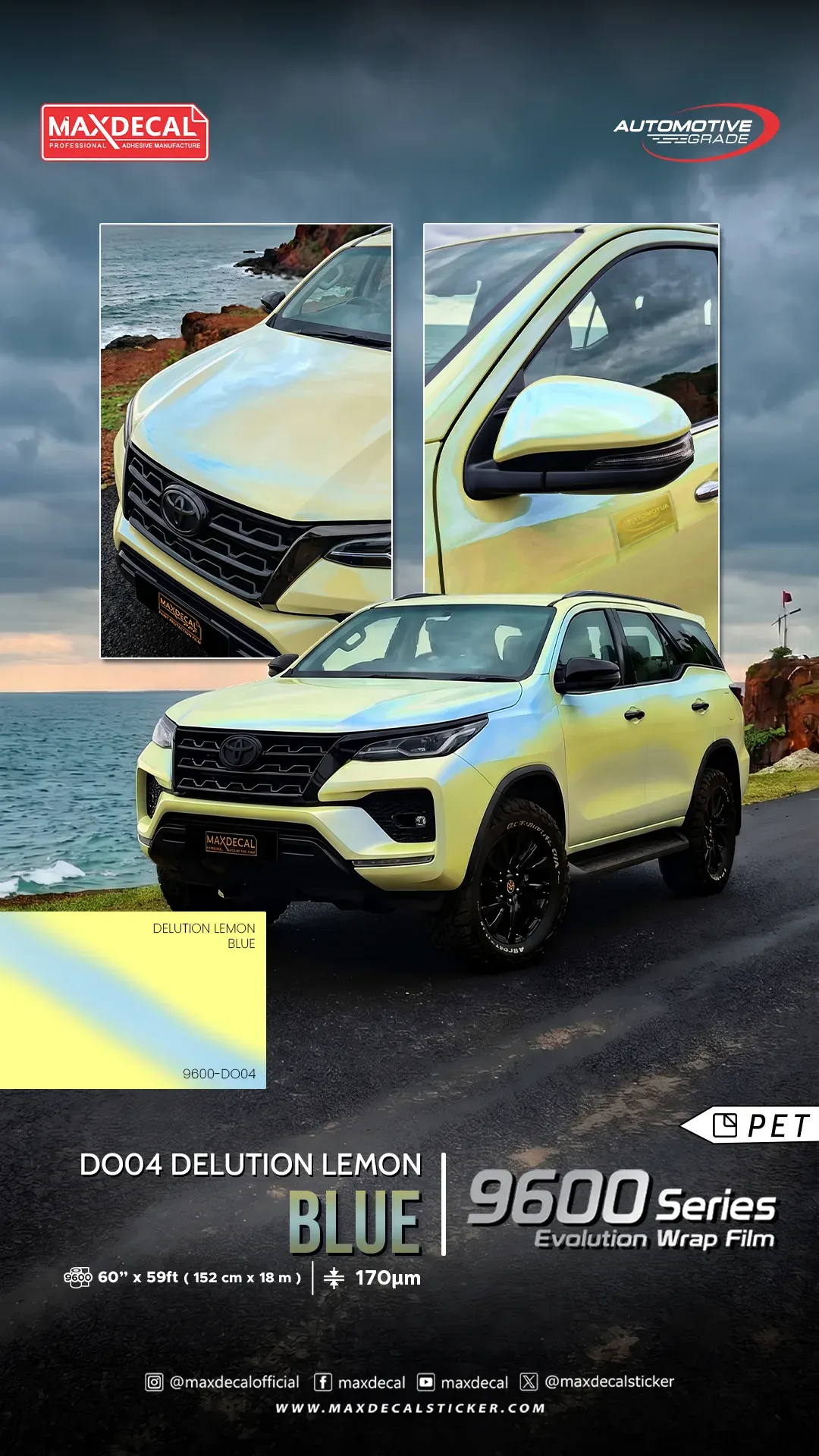
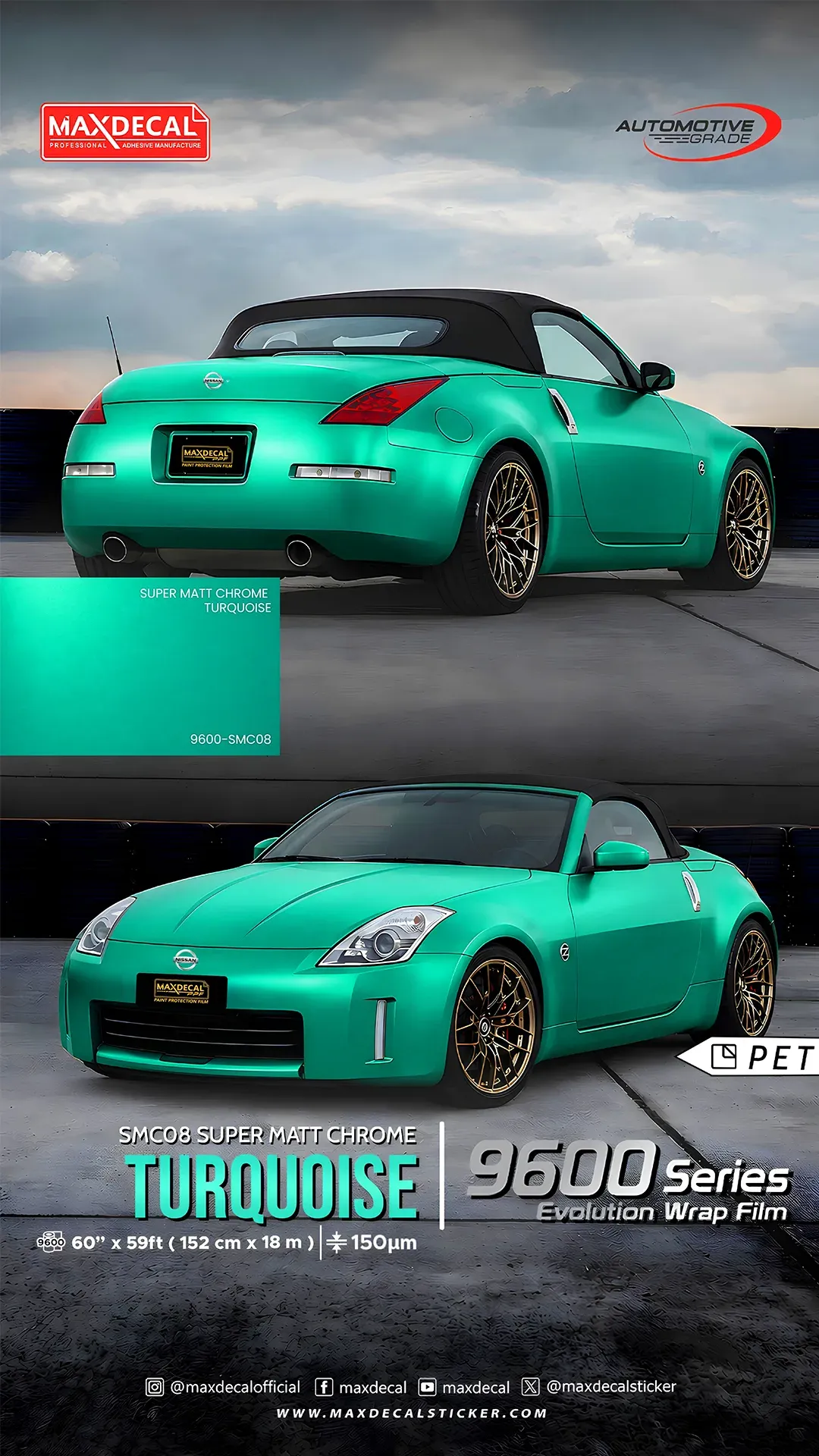
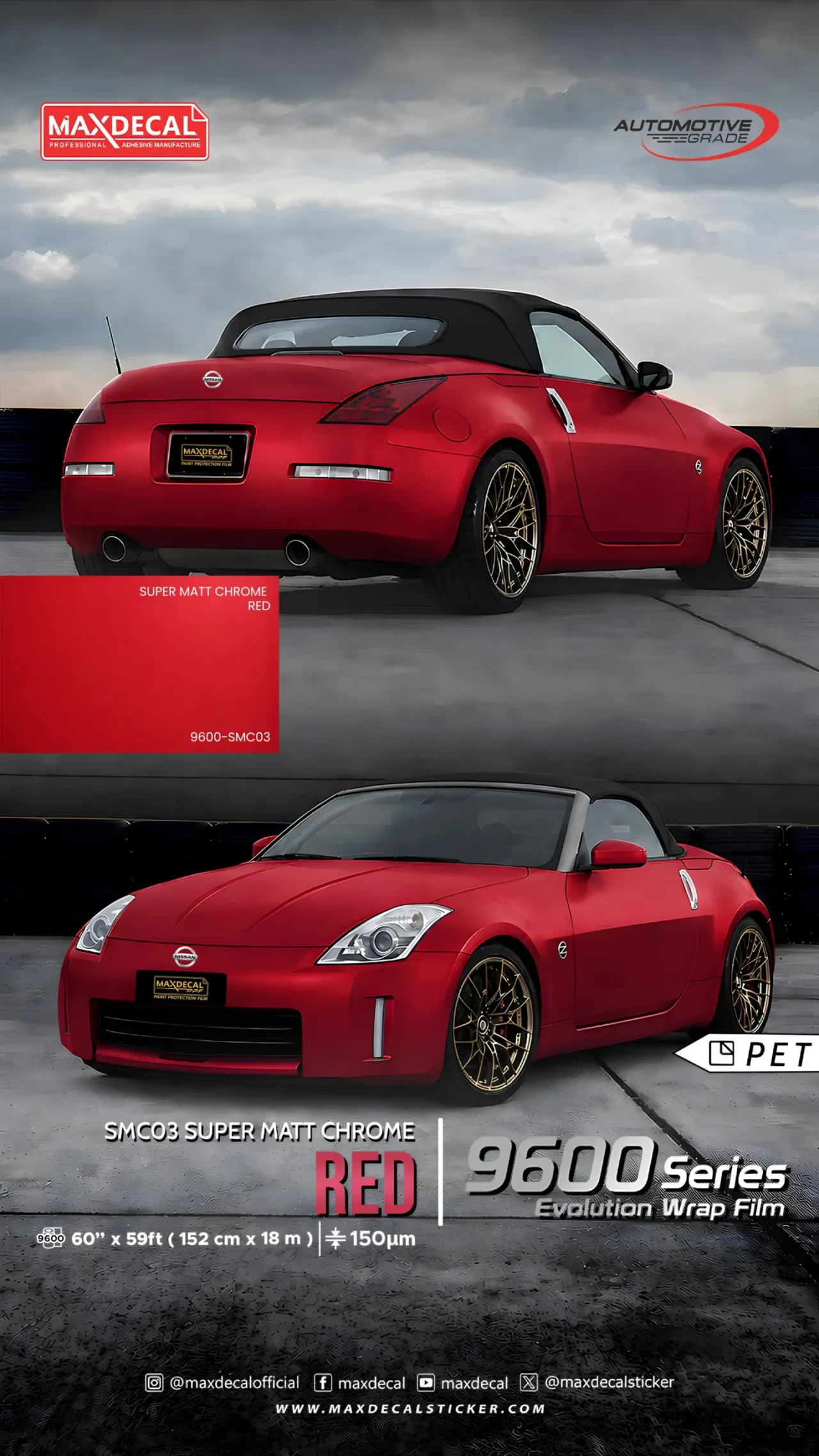
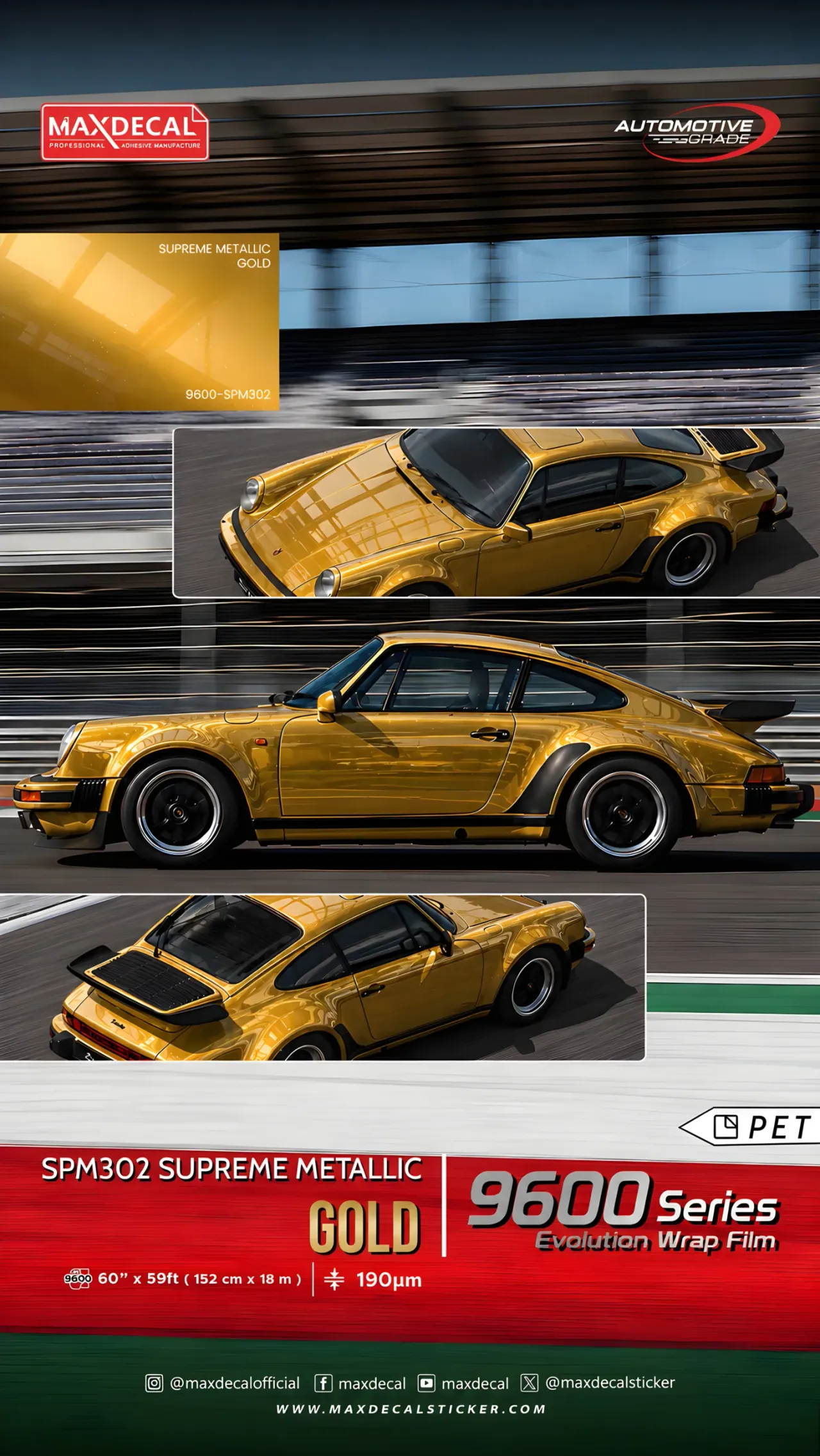
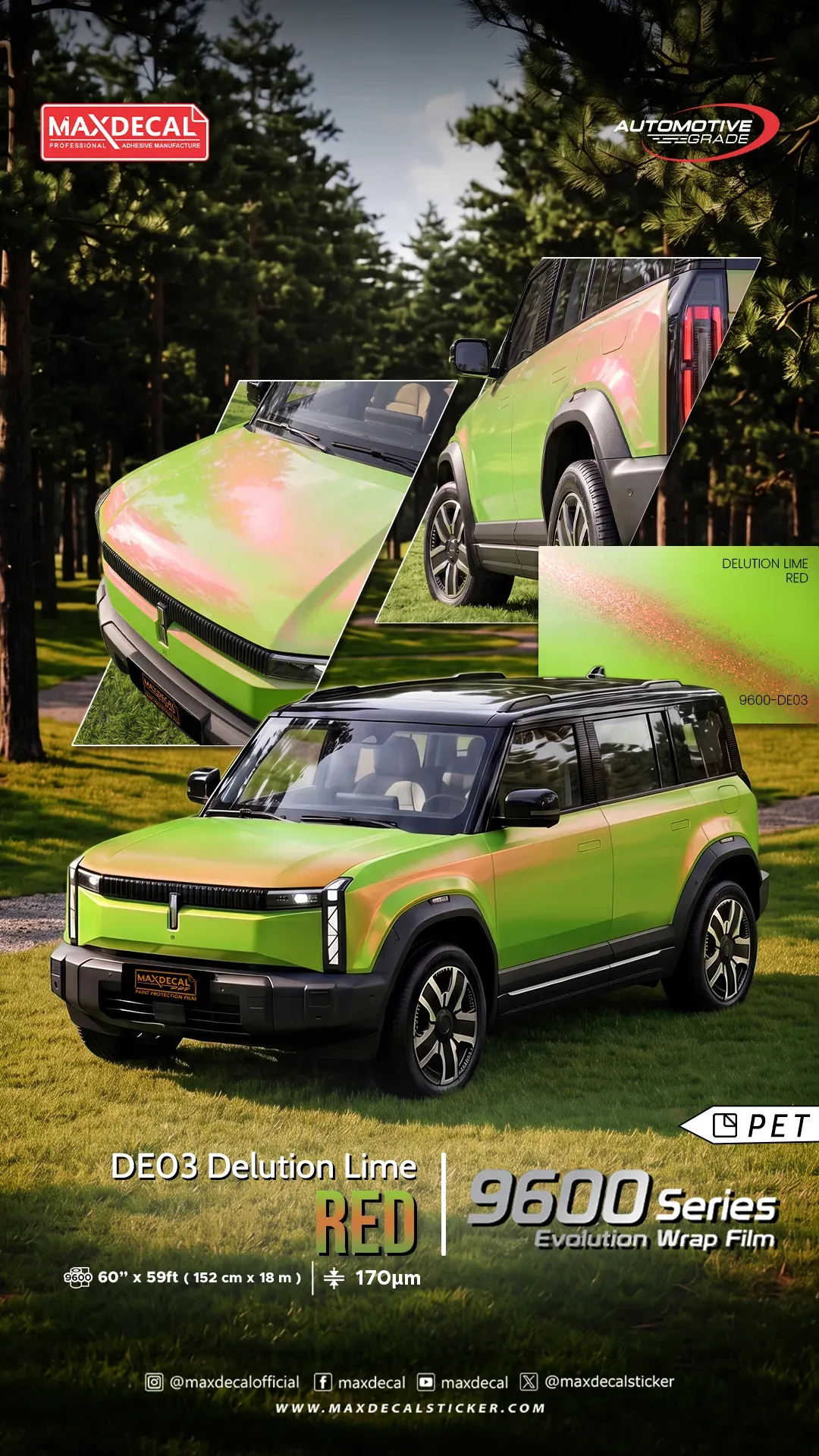
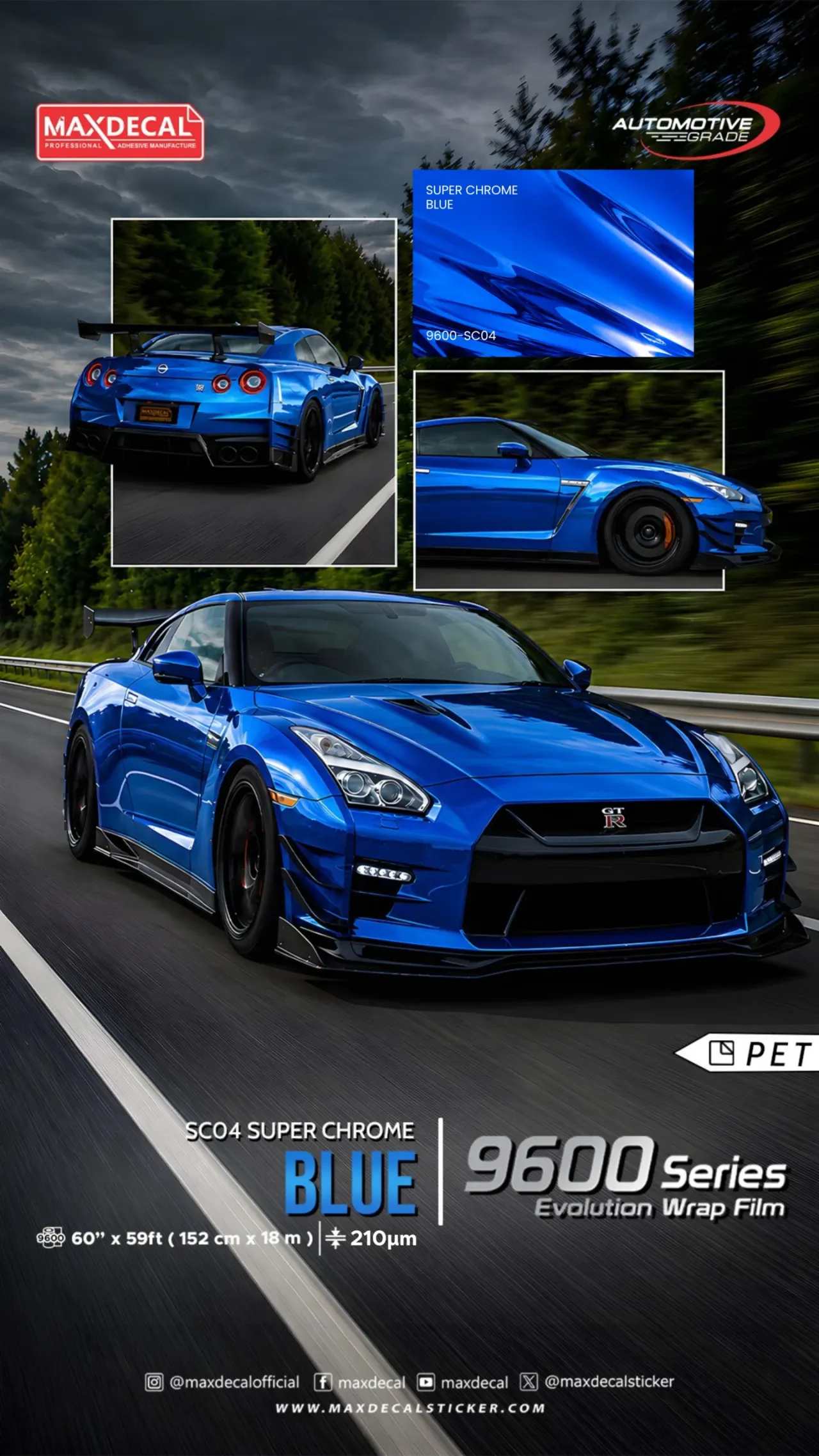
Technical notes
- Roll format: 1.52 m (60 in) × 18 m across the colour families; the printable films and overlaminates ship on 1.55 m (61 in) × 22.86 m; MOQ 1 roll.
- Film thickness varies by family — from 130 µm Super Glossy Candy through the 150–190 µm decorative families up to 200 µm Super Glossy Carbon and 210 µm Super Chrome.
- Adhesive: clear, permanent, pressure-sensitive, repositionable during application.
- Liner: transparent PET release liner, bubble-free with air-release channels and MAXDECAL markings — series-wide, no paper liners in this line.
- Durability (all 9600 datasheets, March 2024 issue): outdoor 3 years vertical / 2 years horizontal; indoor 5 years vertical / 3 years horizontal. Figures assume Zone 1 conditions — check the geographical zone chart in the datasheet for hotter zones.
- Shelf life 1 year in the original packaging; store at 25 °C ± 2 °C, 50 % ± 10 % RH. Application temperature 15–40 °C.
- Standard wrap practice applies: clean and degrease panels, post-heat stretched areas and edges, and keep tension low on chrome and metallic finishes. Creases formed during installation can be recovered with a heat gun.
- Retail packaging: rolls ship boxed and plastic-sealed to protect the film from water splashes and handling damage in transit and storage.
Common questions
How does 9600 relate to the 7600 Plus wrap line?
9600 is the flagship: the widest finish selection (14 colour families and 132 SKUs, plus the 11-SKU printable system) and the broadest spread of constructions. 7600 Plus is a focused premium selection of decorative finishes. Several popular looks — Super Matt Chrome, Delution, Chromaluxtion, Candy, Macaron — exist in both lines, so compare the per-SKU specs when quoting.
Does 9600 need an overlaminate?
The colored wrap families are designed to be installed as they are — no laminate. Printed wrap work is a separate line: the 9600 Printable Series pairs five printable films with six matching overlaminates.
Is 9600 suitable for truck and container wraps?
Yes — 9600 is the line we recommend for truck and container work: a polymeric film that wraps flat commercial bodies well and removes without leaving residue, making it the practical step up from standard calendered media without going to cast film.
How stretchable is the film?
It is a flexible polymeric calendered film made for vehicle curves. Families such as Macaron are tuned for extra stretch, while heavy-gauge finishes like Super Chrome prefer flatter panels and low tension. Deep recesses should always be post-heated, and creases that form during fitting can be recovered by heating.
What makes the liner special?
Every family ships on a transparent PET release liner with bubble-free air-release channels and MAXDECAL markings. PET resists tearing and puncturing better than paper, keeps the film flat and glossy, and releases cleanly, so trapped air can be squeegeed out through the channels on large panels.
How long does it last, and does it damage the paint when removed?
The official datasheets publish 3 years outdoor on vertical panels (2 years horizontal) and 5 years indoor vertical (3 years horizontal) in Zone 1 conditions. The film is designed to be removed with heat without damaging the original paint and without leaving glue residue.